National Commission Holds Training Workshop on International Law and Investigation Methodologies
Aden | 14 October 2026
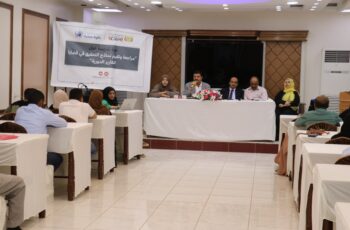
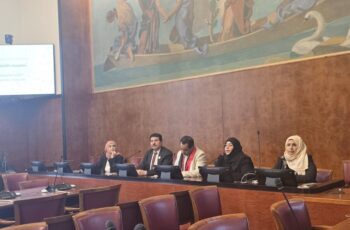
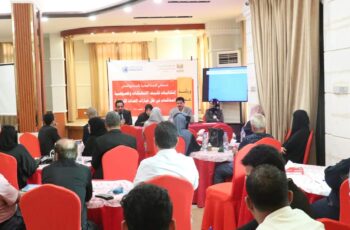
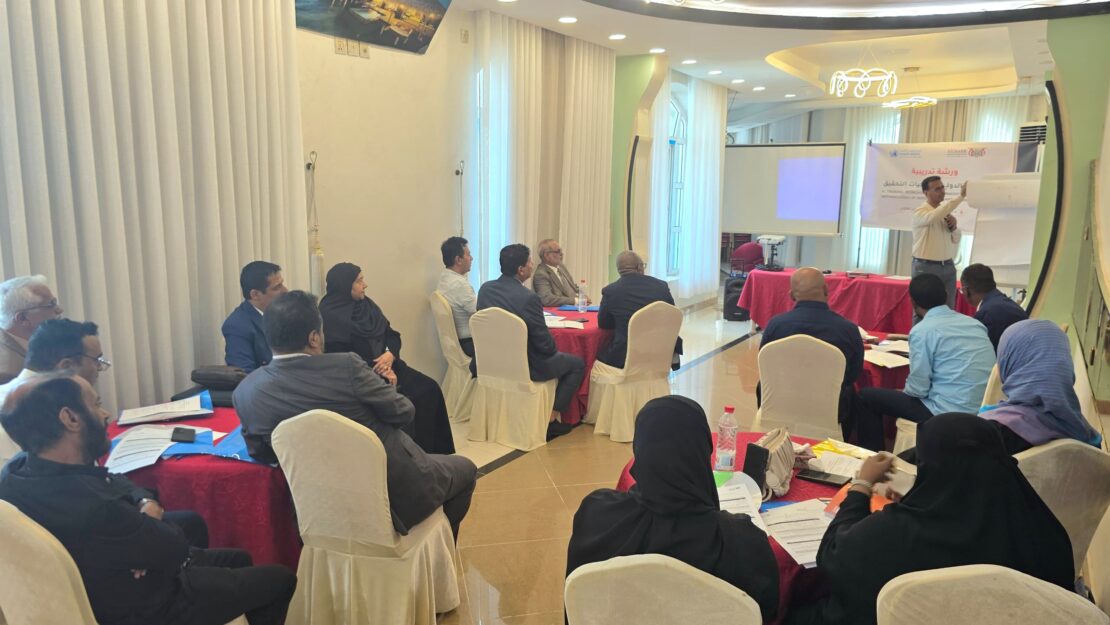
The National Commission to Investigate Alleged Violations of Human Rights, in cooperation with the Office of the United Nations High Commissioner for Human Rights (OHCHR), organized a training workshop in the temporary capital, Aden, on “International Law and Investigation Methodologies.” The workshop aimed to strengthen the capacities of the Commission’s assistant investigators in the legal characterization of violations, evidence collection and analysis, and the development of investigation files.
The four-day programme covered relevant frameworks under international human rights law, international humanitarian law, and national law, as well as rules governing the protection of civilians and civilian objects, the legal characterization of violations, individual responsibility, and command responsibility. It also addressed investigation planning, interview preparation, the assessment of witness credibility, standards for collecting and preserving evidence, and the review of case files.
The workshop included dedicated sessions on digital investigations and open-source information, the verification and geolocation of images and videos, and the documentation of the recruitment and use of children in armed conflict. It also covered child-sensitive interviewing and safeguards for their protection. Practical exercises focused on developing investigation plans and evidence matrices, drafting reports and legal memoranda, and linking facts and evidence to legal analysis.
During the workshop, the Commission’s Chairperson, Judge Ahmed Saeed Al-Muflihi, emphasized the importance of strengthening the capacities of the Commission’s personnel to ensure the quality and accuracy of investigations. He noted that documenting violations and developing investigation files require professional work grounded in evidence and sound legal analysis, contributing to safeguarding victims’ rights and supporting efforts to achieve justice. He also expressed his appreciation for the cooperation with OHCHR and its technical support for the Commission’s work.
For his part, Ahmed Suleiman, OHCHR’s Resident Representative in Yemen, emphasized the importance of strengthening national capacities to investigate human rights violations. He explained that the programme combined legal frameworks with practical applications, enabling participants to exchange experience and develop their skills in evaluating evidence, verifying information, and formulating investigation findings in accordance with professional standards.